

HAPIT NA TA MAMALHIN
Records · Research · Technology · Public service
Shaped by three decades of hands-on public service—three years as a casual employee in city accounting from 1994, then from 1997 in the Office of the Secretary to the Sangguniang, from records and research to technical support, the Paperless Session Program, and the Legislative Tracking System—this archive turns working knowledge into lasting institutional memory.
I began my career in 1994 as a casual employee with the City Accounting Office, and after three years there I joined the Office of the Secretary to the Sangguniang in 1997. Since that move I have served in records management, research and analysis supporting council decision-making, technical support, and digital-transformation work, and my legislative systems development has continued through projects such as the Paperless Session Program and Legislative Tracking System. I developed these systems on my own initiative, beyond my assigned responsibilities, without commission or payment. Offered free of charge, this programming work is my continuing contribution to Pagadian City, the council, and those who will carry the service forward.
A legacy of service, freely shared — preserving records, strengthening research, and aiding legislative work for those who come after me.
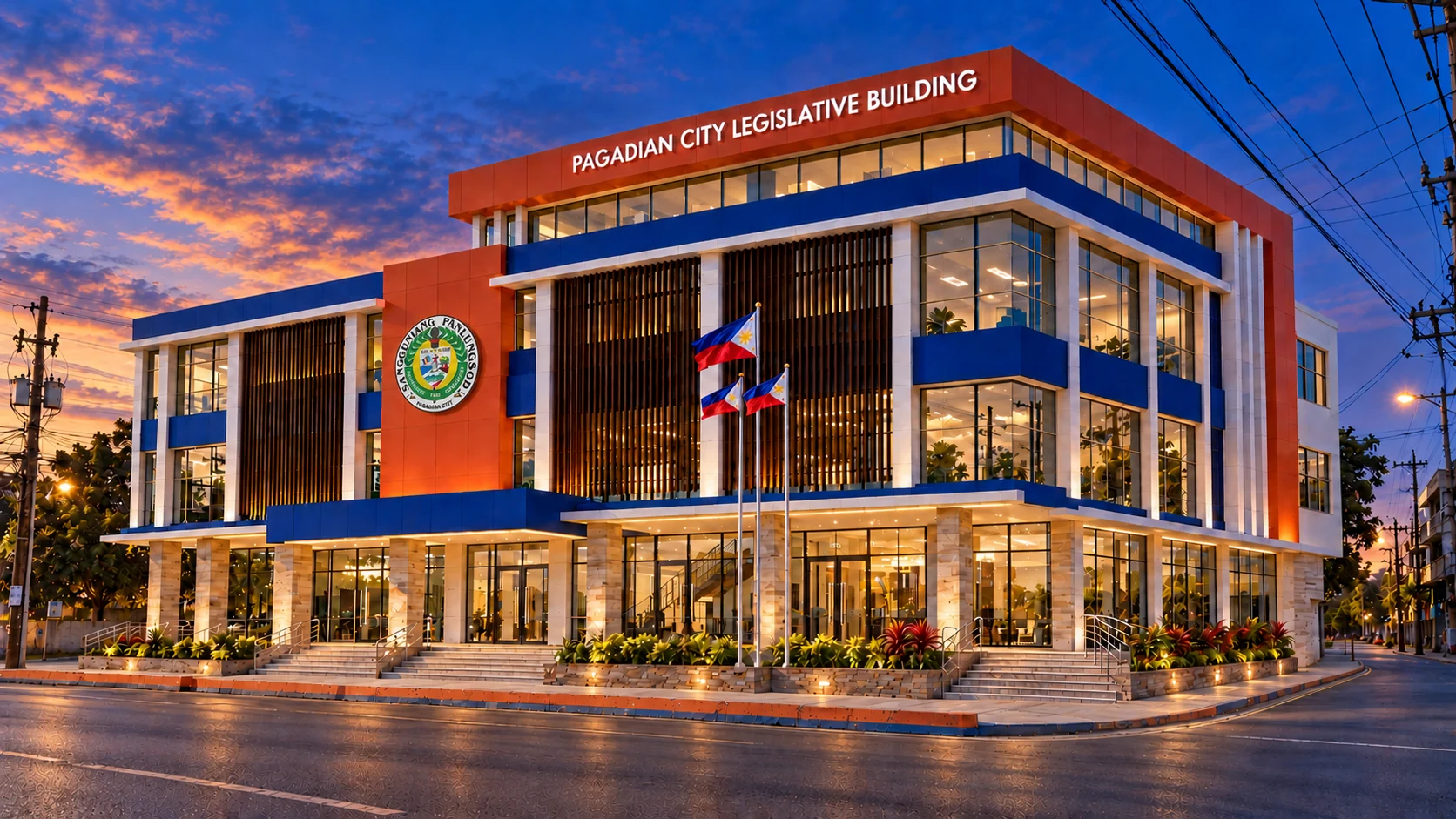
Then & now: the former Legislative Building, our C3 chapter, and Edgar’s artwork →

The public record
The Sangguniang Panlungsod keeps the record of what this city has decided. What that record is, what the law asks of it, and why it is easier to reach today than it once was.
Public record ni — iya sa katawhan sa Pagadian.
I The mandate
The Sangguniang Panlungsod, through the Office of the Secretary to the Sanggunian, is the custodian of this city’s legislative record. Every ordinance and resolution is entered in a book kept for that purpose, with the dates of its passage and publication; the local archives are held in custody; the office and its non-confidential records stay open to the public during business hours; and certified copies of records of a public character are furnished on request. RA 7160, Sec. 469
That duty rests on older ground. The Constitution recognises the right of the people to information on matters of public concern and provides for access to official records and documents pertaining to official acts. Art. III, Sec. 7 Beside it stands a declared policy of full public disclosure of transactions involving public interest. Art. II, Sec. 28 One recognises the citizen’s right to ask; the other places the duty on government to tell. Publication is not ceremony either — an ordinance takes effect only after it is posted and published as the Code directs. RA 7160, Sec. 59 The law is meant to reach the people before it binds them.
The Sanggunian is the official repository for the city.
What is opened here is the public, non-confidential legislative record. Personal data, working drafts, confidential referrals and private attachments remain closed — as the Data Privacy Act requires, and as the Code’s own qualifier, non-confidential, already provides. RA 10173
II From right to reach
A law can establish a right. Whether that right is usable is a separate question.
A resident entitled to a copy of an ordinance, but who does not know it exists, cannot act on that entitlement. Neither can the one who cannot make the trip, who arrives after closing, or who does not happen to know someone inside to ask. In none of these cases was the record withheld. It was simply out of reach.
Everyone holds the right. Not everyone can reach it.
Public officials are already bound to act on requests within a set period and to make documents accessible. RA 6713, Sec. 5 An archive that answers before a letter has to be written serves that same duty earlier, and spares the citizen the errand.
The same search then serves the student writing a paper, the barangay official checking whether an ordinance still stands, the lawyer tracing an amendment, the journalist confirming what was passed, and the resident who only wants to read the rule that applies to them. A council member and a farmer arrive at the same record, by the same door, at the same hour — and none of them needs an acquaintance inside to get there.
III What makes a record usable
Storage alone is not access. A record kept safely but findable only by someone who already knows its number has been preserved, not published. What turns a shelf into a working knowledge base is the ordinary, unglamorous part: numbering and dating each measure, indexing it by year, author and subject matter, codifying what belongs together, scanning the paper, making the full text searchable, and binding the entry to the document so the reader arrives at the actual page.
A record that cannot be found may as well not exist.
Search by a word you remember, not a number you never had.
It also means carrying legislative history, not only current text. Knowing that a measure was amended, superseded or repealed is often the difference between reading a record and understanding it — and that history is what a council needs most. Councils change, staff retire, terms end. A measure can be proposed again years later with no one recalling it was already passed, amended, or set aside for reasons that still hold. The record does not forget, but only if someone can consult it.
So the city legislates on its full record rather than on partial memory, with less duplication and less contradiction. Openness is the better-known reason for opening an archive. Continuity is the quieter one, and for a legislature it may matter just as much.
Legal bases referred to above: 1987 Constitution, Art. II Sec. 28 and Art. III Sec. 7; Republic Act No. 7160 (Local Government Code of 1991), Secs. 59 and 469; Republic Act No. 6713 (Code of Conduct and Ethical Standards for Public Officials and Employees), Sec. 5; Republic Act No. 10173 (Data Privacy Act of 2012). This archive covers public, non-confidential legislative records and does not extend to documents restricted by law.