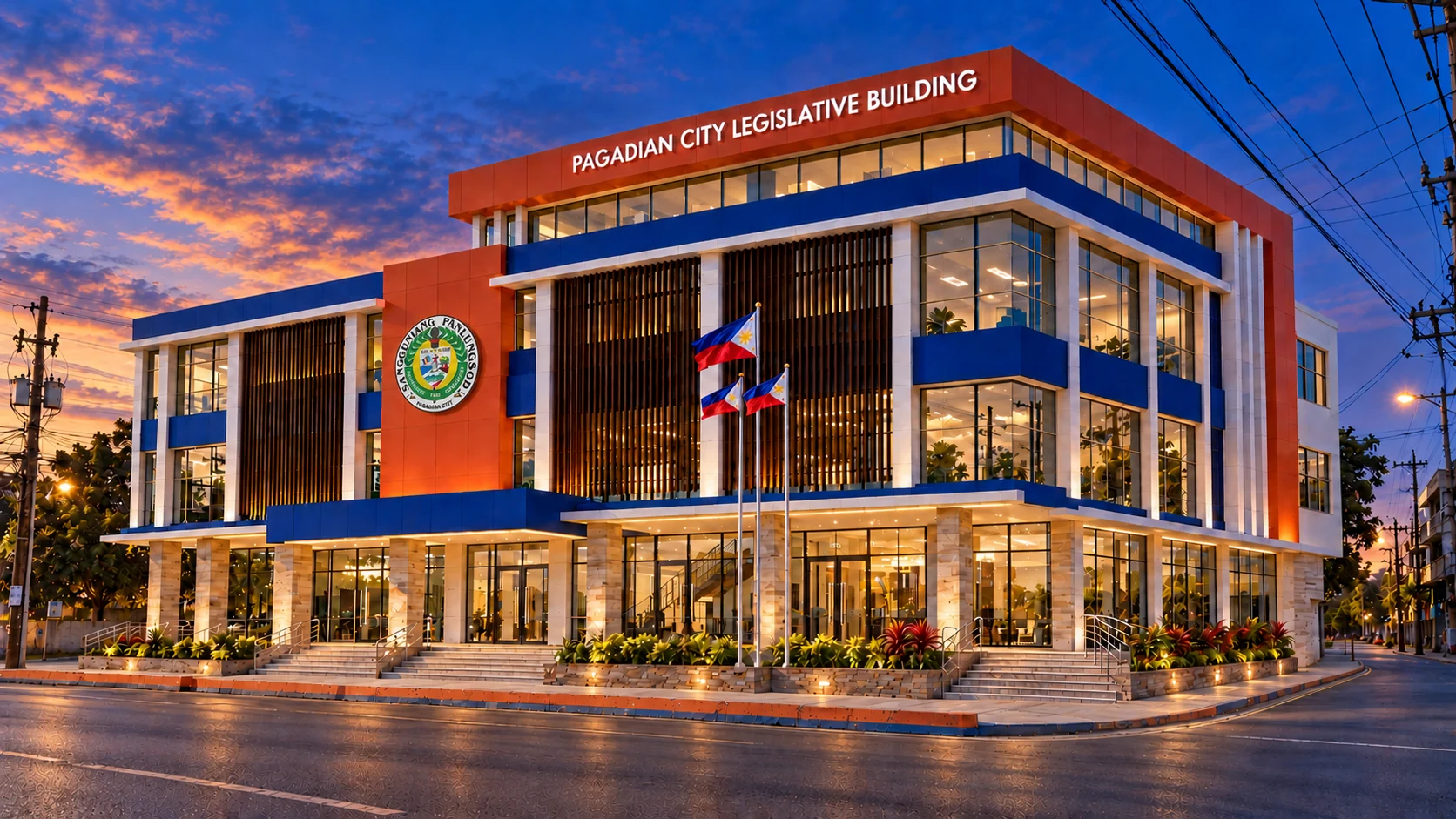
Exterior · DESIGN PREVIEW
A new home for public service
The familiar orange crown, cobalt bands and walnut fins welcome a new chapter for the Sanggunian. The evening lighting is a proposed presentation treatment.
 Our new homeSANGGUNIANG PANLUNGSOD · PAGADIAN
Continue to sign in
Our new homeSANGGUNIANG PANLUNGSOD · PAGADIAN
Continue to sign in
Hapit na ta mamalhin.
Let’s take a first look at the spaces where Pagadian’s next chapter of legislative service will unfold.
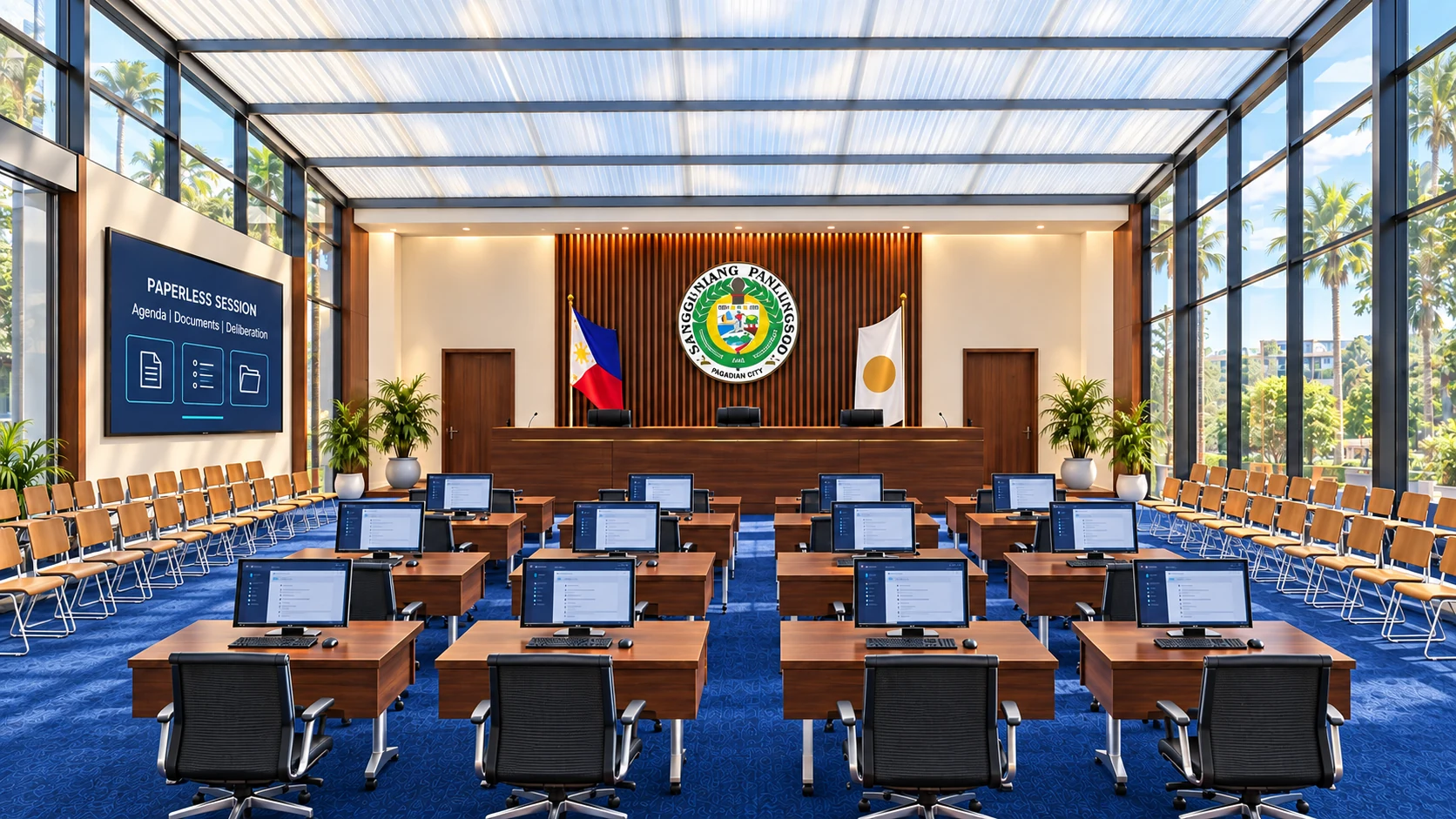
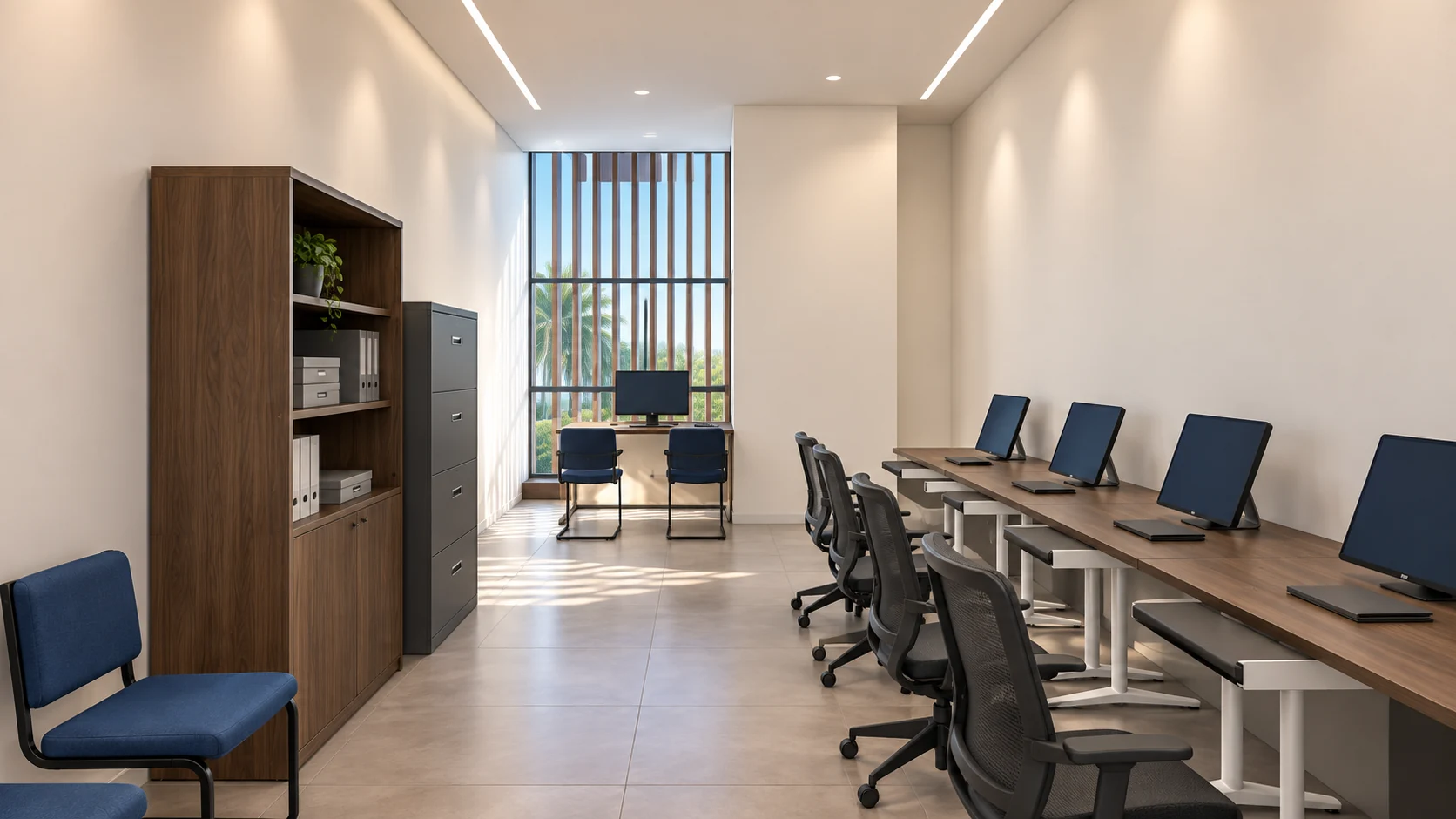
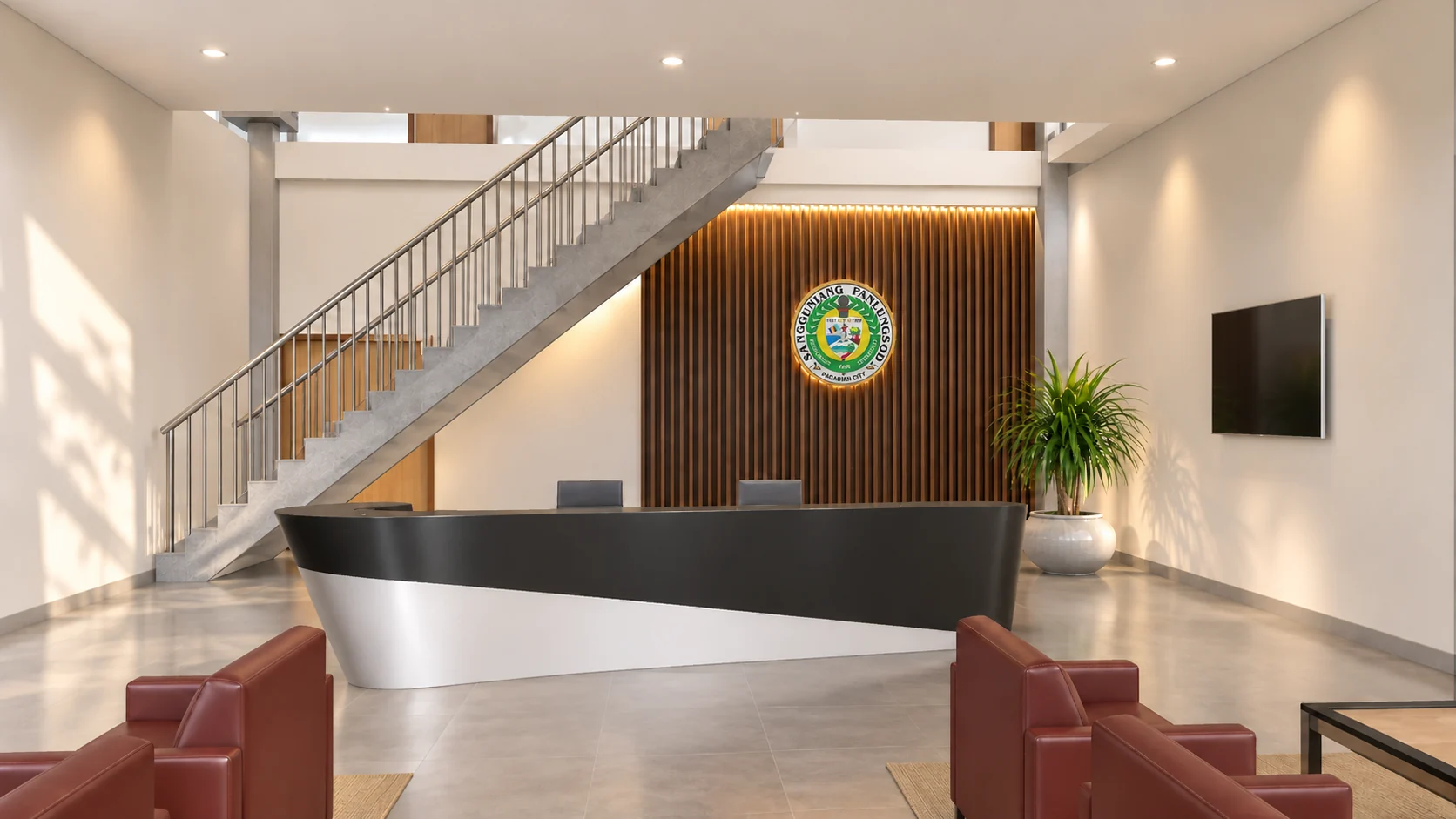
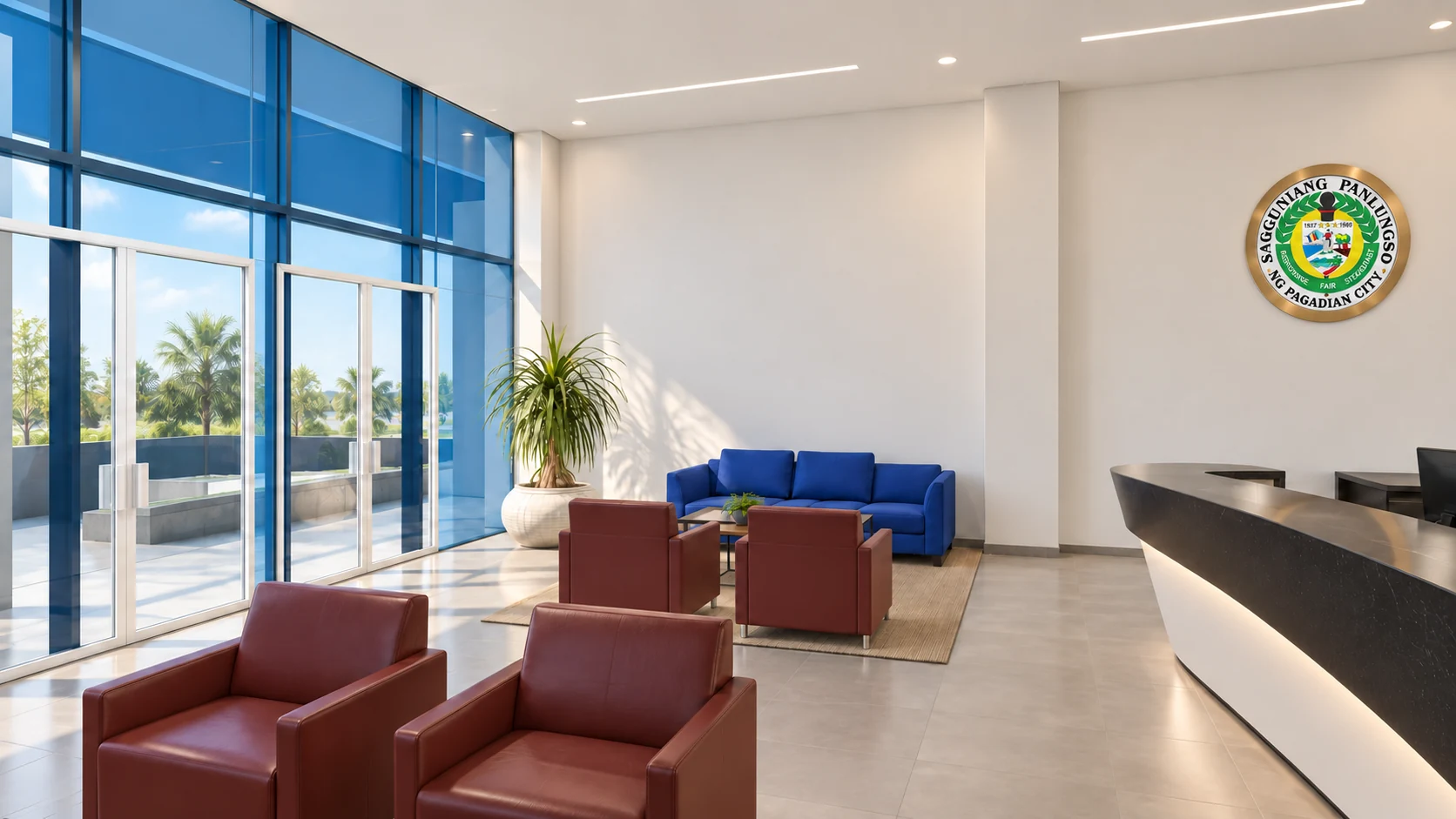
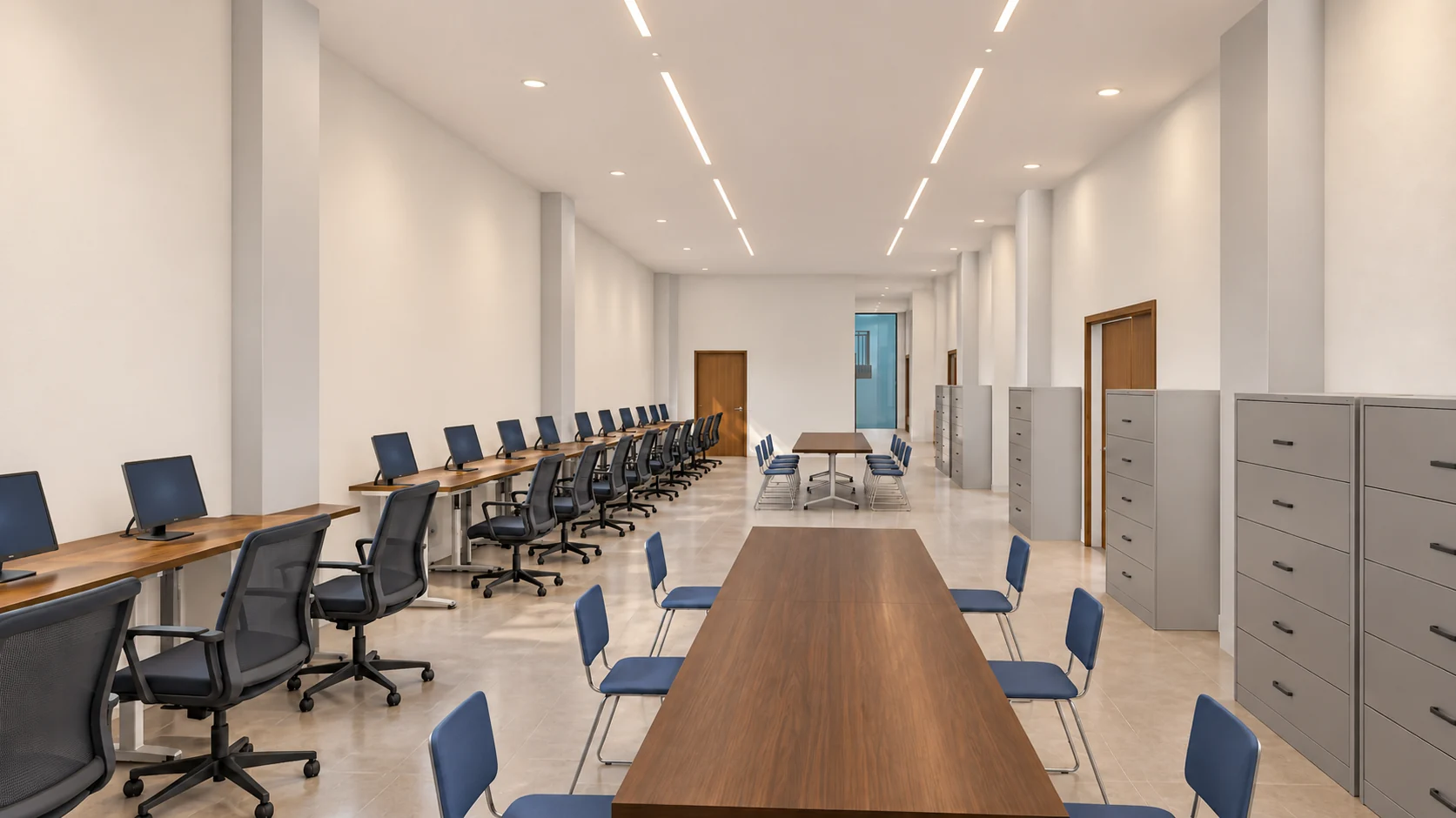
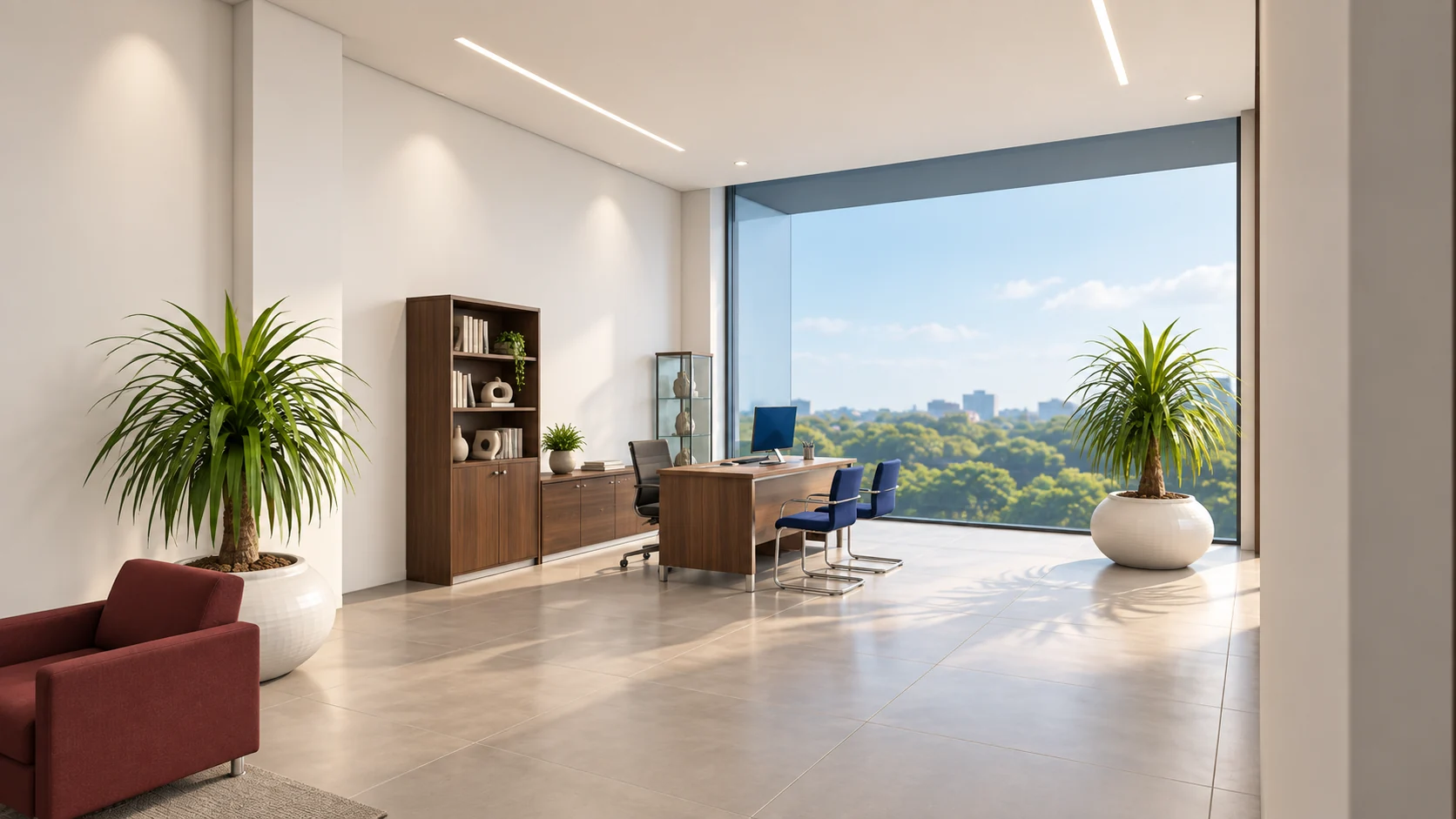
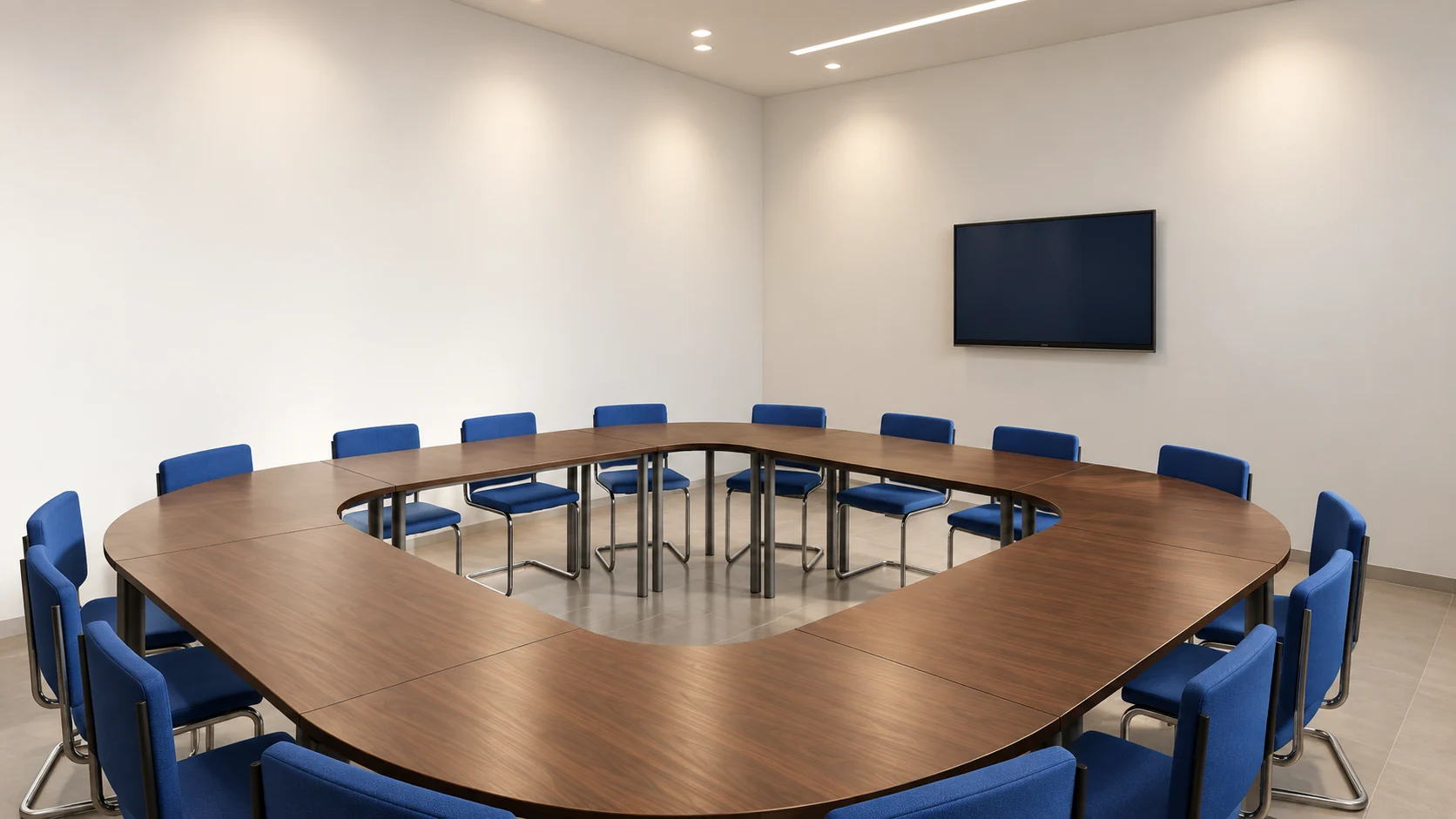
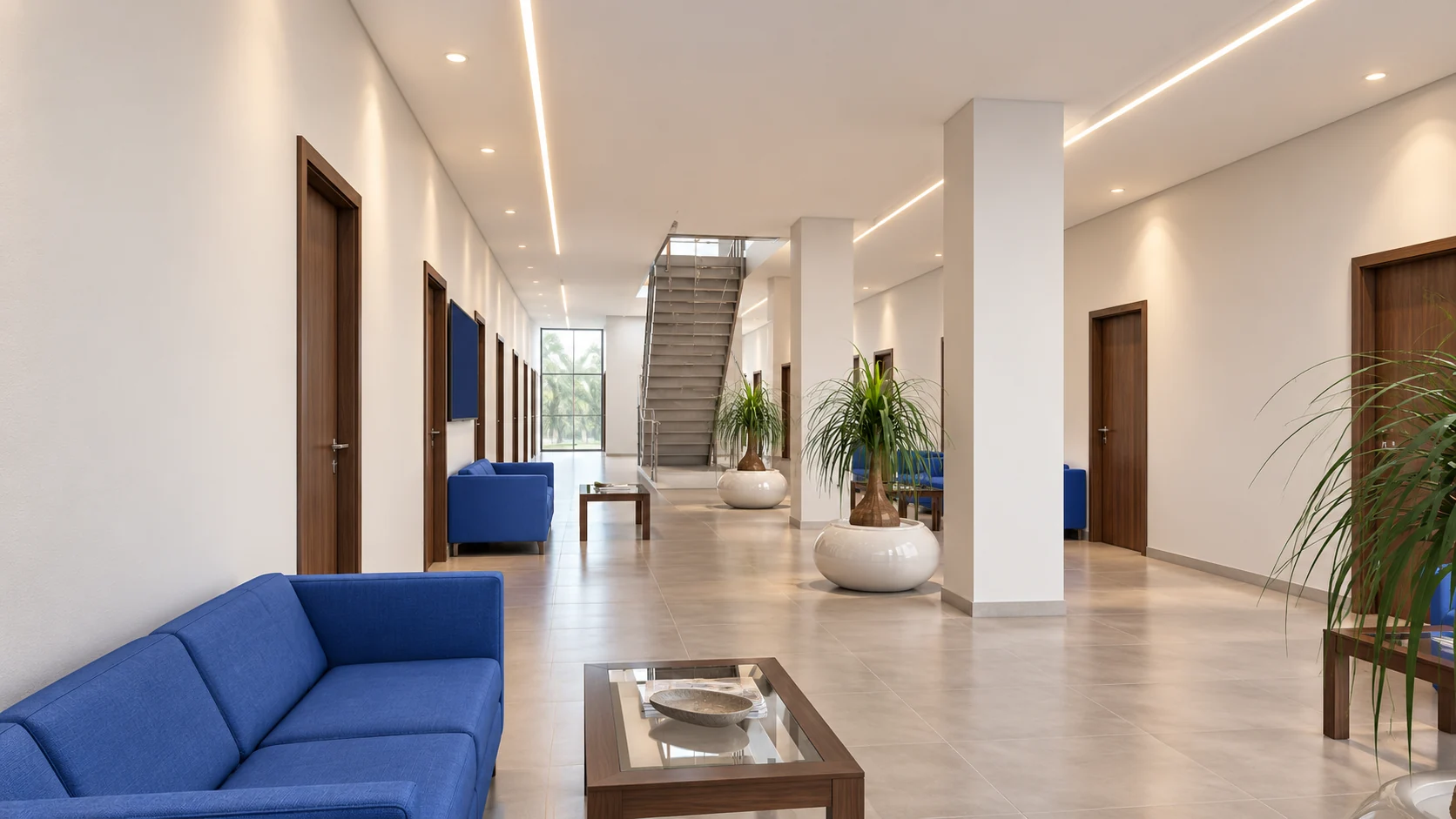
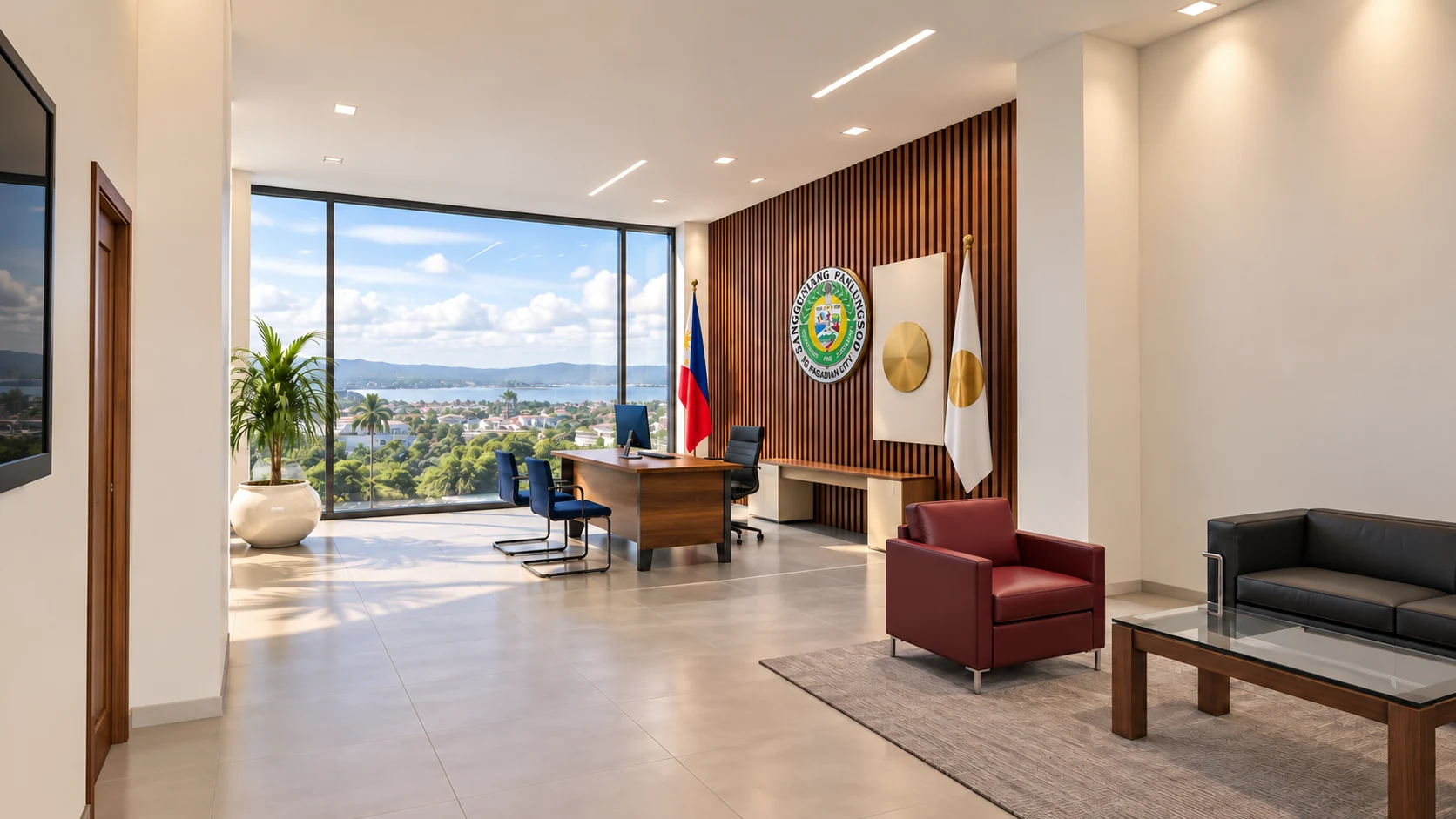
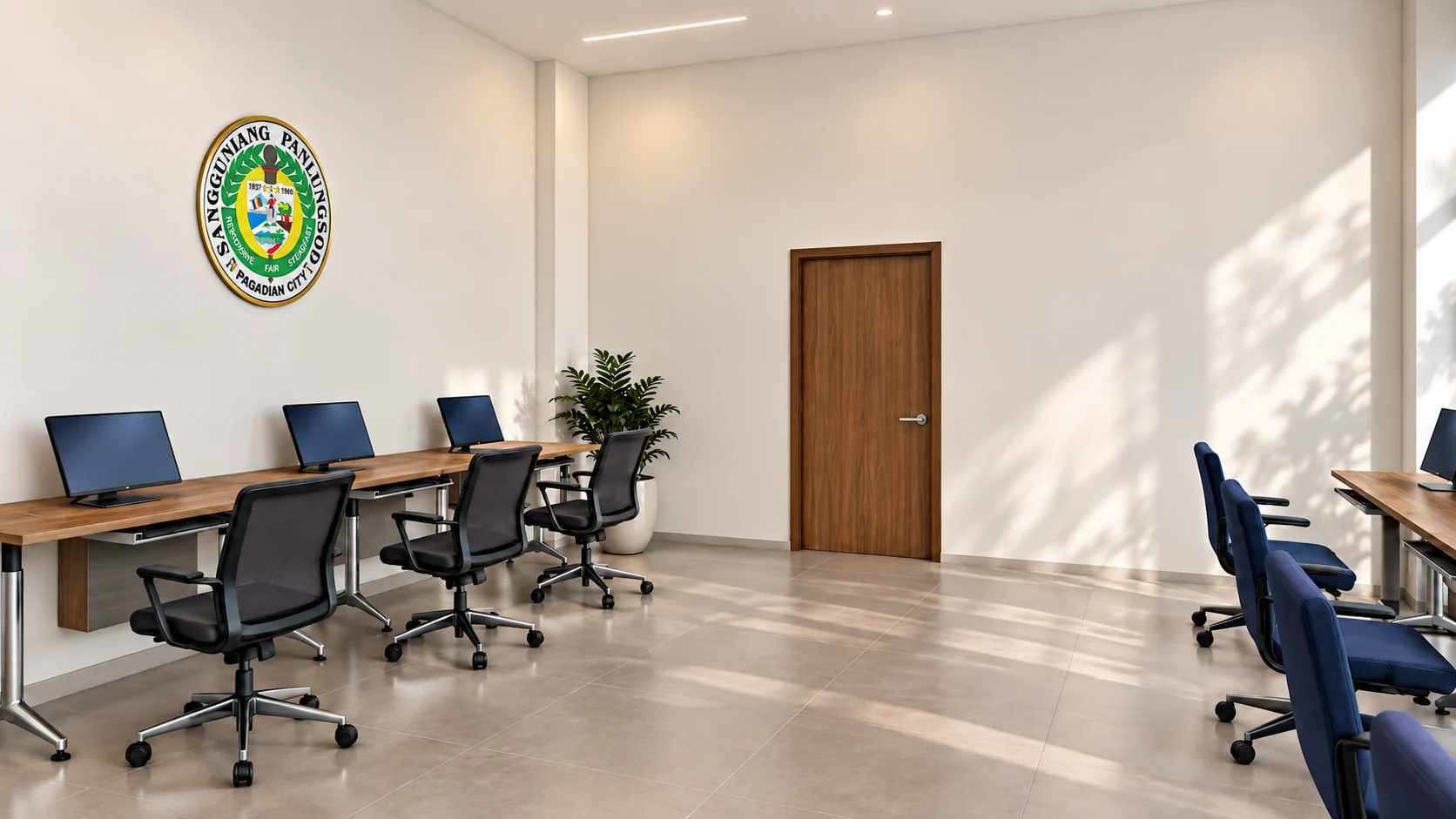
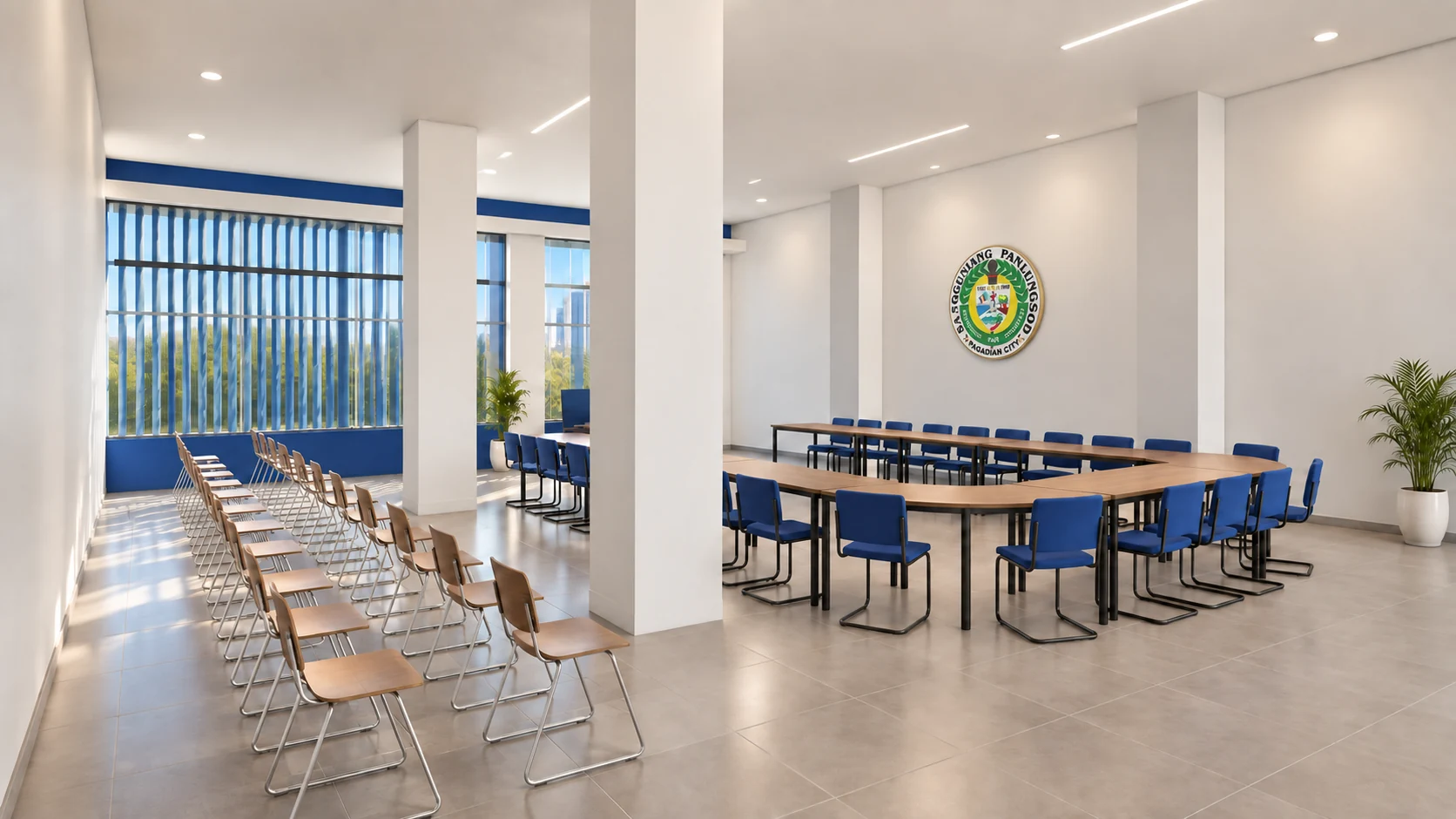
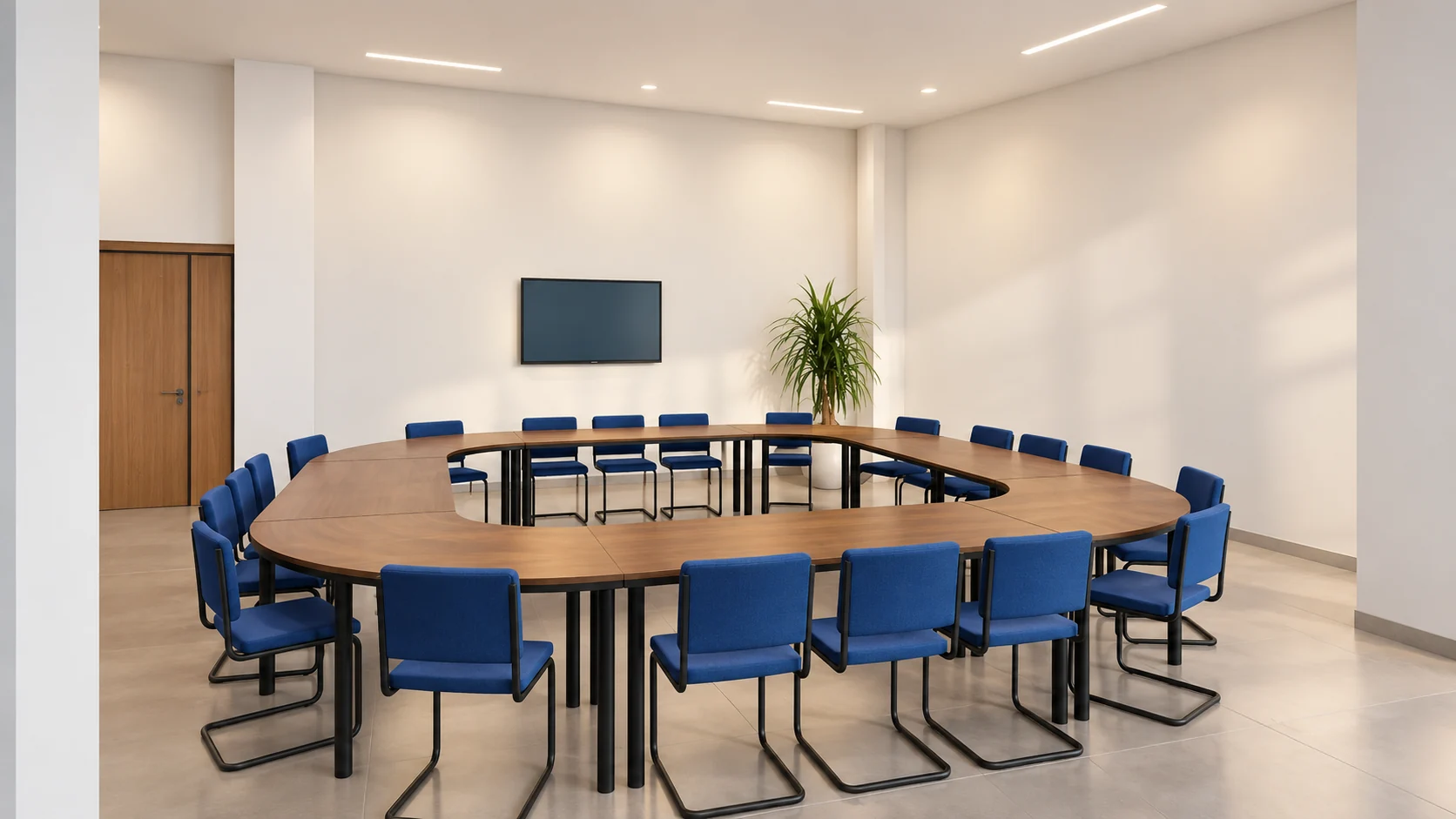
A vision for the move ahead. These are design visualizations based on the reference model; finishes and furniture are proposed.
Edgardo D. Caseñas
Personal 3D modeling & artistic design study
“Hon. Sr. Fernando Y. Pameron, former City Councilor and contractor of the SP Building, asked me to assist with structural matters together with Engr. Quimno. That involvement gave me some familiarity with the development of the SP Building.
Using the supplied floor plans as my basis, I personally modeled this building and developed my own artistic interpretation of its spaces, materials and atmosphere. This is my artwork: a way to help our council and staff see the rooms and the Session Hall before we move.”
Personal account and artwork by Edgar. This artistic presentation does not establish structural design authorship or engineering approval; proposed finishes, furniture and inferred geometry remain subject to confirmation.
Every ordinance, resolution and proceeding holds part of Pagadian’s story. The records section helps keep that story organized, reliable and retrievable, so today’s council and the people who follow can return to the evidence behind a decision.
The Sanggunian’s records section serves as a librarian of the city’s legislative memory. It helps the Office of the Secretary to the Sanggunian preserve the official acts, proceedings and archival records entrusted to its custody, organize them by subject and date, and help people locate the record they need. The value is in keeping both the document and the story around it: what was considered, what action was taken and which supporting records explain it.
Its collection can bring together ordinances and resolutions, journals of proceedings, committee records, legislative actions concerning donations and property, boundary-related references, accomplishment reports and the source records behind legislative statistics. These materials connect one council term to the next. A new set of officials or staff can build on what is already recorded, rather than lose the history when people change.
Ang mga opisyal mahimong mausab; ang kasaysayan sa ilang mga desisyon kinahanglan magpabilin. Mao kini ang bili sa records: ang dokumento nga giampingan karon mahimong tubag sa pangutana sa sunod nga henerasyon.
The legal duties belong to the Secretary to the Sanggunian. Republic Act No. 7160, Section 469 covers the journal of proceedings, recording ordinances and resolutions, public records and certified copies in the office’s custody, and custody of local archives and, where applicable, the local library. “Librarian of legislative memory” describes this work. Read Section 469 of the Local Government Code ↗
“I began my career in 1994 as a casual employee in the City Accounting Office. After three years, I joined the Sangguniang Panlungsod in 1997, where I continue to serve today.
For more than 28 years, my work in the records section has shown me why a document must be preserved, why a referral must be followed, and why the history of a council decision must remain easy to retrieve. As a researcher and analyst, I also aid council members in understanding the background of legislative matters, examining relevant records and considering evidence and statistics for informed decision-making. Those everyday needs led me to develop the Legislative Tracking System, this website and paperless-session systems.
These initiatives are now also adopted by other LGUs. My contribution grew from the work I know personally: protecting records and finding practical ways for the Sanggunian to serve better.”
Edgar D. Caseñas · Personal account of service and systems development
“I began in the City Accounting Office as a casual employee in 1994. In 1997, I joined the Sangguniang Panlungsod. My years in records taught me that public service continues long after a session ends. The council’s action becomes a record that someone may need years later: a member preparing a proposal, a researcher tracing a decision, or a staff member trying to understand what happened before.
A request may sound simple: ‘Find the resolution.’ Behind it can be a larger question about a donation, a boundary matter, a previous commitment or an accomplishment. Finding a document is only the beginning. Its date, subject, related proceedings and supporting papers help us understand what it actually records.
As a researcher and analyst, I help council members return to that evidence. I look for relevant records, study the background of a matter and organize information and statistics so the members can examine it during their deliberations. My role is to help them see the context clearly; the legislative judgment belongs to the council.
That experience also gave purpose to my programming. I created the Legislative Tracking System, the website and paperless-session systems because I saw how much time and continuity could be gained when records are easier to trace and retrieve. I developed this work on my own initiative, beyond my assigned responsibilities, and offered it free of charge. I want what I have learned to remain useful to Pagadian and to the people who will continue this work after me.”
Edgar D. Caseñas · Personal account of service, research and systems developmentGood records work gives a future reader a clear path back to the source. These are the principles behind the records and systems story.
“This programming work is my personal legacy of service to Pagadian City. No one commissioned me to develop these systems, and I received no payment for this work. I created them on my own initiative, beyond my assigned responsibilities, because I saw a need and believed I could help. I offered that work free of charge to support the Sanggunian, the people of Pagadian, and those who will continue our work.
I know my time in this world is limited. While I am able, I want to leave something useful: systems that preserve our records, strengthen research, help council members make informed legislative decisions, and support those who come after us. This is my way of passing on what I have learned so that public service can continue beyond my own time.”
“I love my work. Even when it is difficult, I give it my best. Love the work you do. If you do not yet love it, make an honest effort to learn. But if you are unwilling to love your work or learn to value it, have the courage to move on. To stay without care or commitment is to do an injustice to yourself and to the work entrusted to you.”
Edgar D. Caseñas
My research and analysis support the council’s decision-making: finding relevant records, explaining a matter’s background and organizing evidence that members can examine for themselves.
The official actions that guide the city.
Keep the enacted or adopted text identifiable by number, date and subject, together with the relevant record of action. This helps a reader locate the correct document and trace the legislative history.
For the council & future readers: A member researching an earlier policy can return to its recorded text and the related proceedings before proposing the next step.
The evidence behind a public commitment.
Preserve council actions and supporting documents relating to donations, acceptance and property matters within the office’s custody. Connect the decision to the available donor, purpose, conditions and related references.
For the council & future readers: A later inquiry can trace what the council authorized or accepted and which supporting documents belong to that action. Legislative records should be read alongside the relevant property documents.
Recorded references that future research can return to.
Keep boundary-related council actions, references, maps and attachments together where they form part of the legislative record. Their source and date help a researcher distinguish the records of a matter over time.
For the council & future readers: Council members can examine the available history and supporting references. A legislative record supplies evidence; its existence alone does not settle a boundary question.
The path from discussion to official action.
Connect agendas, the journal of proceedings and relevant committee records to the resulting ordinance or resolution. This preserves the context of deliberation and the sequence of recorded action.
For the council & future readers: A new council or staff member can understand how a matter reached its outcome and which records explain the process.
A council term that remains understandable after it ends.
Keep reports and the records supporting them linked to the period and legislative work they describe. The archive helps explain both the output and the public purpose behind it.
For the council & future readers: Achievements can be presented with their supporting records, allowing later readers to understand the work across different council terms.
Useful figures begin with identifiable sources.
Organize the records behind counts and comparisons, state the reporting period and explain what is included. A total has meaning when a reader can understand how it was obtained.
For the council & future readers: Research and accomplishment reporting can use source-based figures with consistent definitions. This presentation does not invent council statistics.
Follow legislative matters through referrals, committee work and action. The practical reason is continuity: a matter should remain traceable even when responsibility passes to another person.
Give people an organized way to discover the Sanggunian’s work and reach the appropriate information or authorized workspace. The reason is easier retrieval and a clearer understanding of public service.
Bring agenda and document viewing closer to the session itself. The new hall’s side TV expresses that direction: a shared view that supports discussion and reduces unnecessary printing.
The new SP Building brings the council’s offices, legislative work and public-facing services into a shared home. From a constituent’s first visit to a committee hearing and a formal session, each floor has a part in making service easier to find.
This is my personal model and artistic study of the new SP Building, created from the supplied floor plans. Use this room guide to meet the offices, sections and everyday facilities before the move.
From floor plan to a place we can imagine.
Edgardo D. Caseñas · Personal 3D modeling, interior interpretation and exterior artwork. Enhanced renders bring my model into a warmer visual setting; the floor plans remain the basis of this guide.
Reception, the Secretariat, records, conference facilities, pantry areas and comfort rooms support the public-facing ground floor.
Why it matters: a recognizable first contact helps constituents reach the correct office and keeps visitor conversations from interrupting focused staff work.
Why it matters: legislative service depends on the work between sessions: preparing documents, organizing referrals, checking records and keeping the next action traceable.
Why it matters: a defined coordination and receiving space helps the office direct legislative documentation, records custody and day-to-day service.
Why it matters: a separate meeting room supports coordination without occupying the Session Hall or interrupting staff workstations.
Why it matters: a dependable record is evidence of a public decision. A dedicated records area supports organized custody, retrieval and continuity when officials and staff change. Researchers and analysts can connect those records with the questions council members need to examine.
Why it matters: meetings and records work often continue for long hours. A pantry supports practical staff and visitor needs without using desks or document-storage areas for refreshments.
Why it matters: meetings and records work often continue for long hours. A pantry supports practical staff and visitor needs without using desks or document-storage areas for refreshments.
Why it matters: conveniently located comfort rooms support staff and visitors during long office visits, hearings and sessions.
Why it matters: conveniently located comfort rooms support staff and visitors during long office visits, hearings and sessions.
Why it matters: conveniently located comfort rooms support staff and visitors during long office visits, hearings and sessions.
Why it matters: a recognizable first contact helps constituents reach the correct office and keeps visitor conversations from interrupting focused staff work.
Why it matters: these spaces provide flexibility for future occupants or services while keeping the main reception and Secretariat identifiable.
Why it matters: these spaces provide flexibility for future occupants or services while keeping the main reception and Secretariat identifiable.
Why it matters: these spaces provide flexibility for future occupants or services while keeping the main reception and Secretariat identifiable.
Why it matters: these spaces provide flexibility for future occupants or services while keeping the main reception and Secretariat identifiable.
Why it matters: the lift provides a planned alternative between floors for people who have difficulty using stairs. Operating and access arrangements remain part of move-in preparation.
Why it matters: clearly understood circulation helps people find the correct floor and move between services without repeatedly asking for directions.
Why it matters: clearly understood circulation helps people find the correct floor and move between services without repeatedly asking for directions.
Sixteen councilor office spaces, each with a private CR, surround a shared waiting lobby. Pantry / utility and common comfort rooms sit at the rear left.
Nine front-row and seven rear-row office spaces. Each shows a private CR, an executive desk, staff workstations and visitor seating. Member-to-room assignments will be confirmed by the office. Why it matters: an office gives members and staff a defined place for constituent conversations, research and preparation while preserving privacy and keeping the shared lobby clear.
Why it matters: a defined waiting area gives constituents a comfortable place to pause while keeping doors, desks and circulation paths clear.
Why it matters: meetings and records work often continue for long hours. A pantry supports practical staff and visitor needs without using desks or document-storage areas for refreshments.
Why it matters: conveniently located comfort rooms support staff and visitors during long office visits, hearings and sessions.
Why it matters: conveniently located comfort rooms support staff and visitors during long office visits, hearings and sessions.
Why it matters: separating building services from everyday work areas gives equipment a defined location and supports orderly maintenance.
Why it matters: the lift provides a planned alternative between floors for people who have difficulty using stairs. Operating and access arrangements remain part of move-in preparation.
Why it matters: clearly understood circulation helps people find the correct floor and move between services without repeatedly asking for directions.
Why it matters: clearly understood circulation helps people find the correct floor and move between services without repeatedly asking for directions.
The Session Hall, Vice Mayor’s office and staff section, hearings, conference and receiving spaces share the legislative floor with records, control/support rooms, lounges and comfort rooms.
Why it matters: clear sightlines and a shared document display help members and observers follow the same discussion, while the proceedings become part of the council’s continuing record.
Why it matters: placing the presiding office close to staff, hearings and the Session Hall supports preparation, coordination and continuity of legislative work.
Why it matters: staff support keeps schedules, communications and session preparation connected to the presiding office.
Why it matters: a recognizable first contact helps constituents reach the correct office and keeps visitor conversations from interrupting focused staff work.
Why it matters: committee work needs room for resource persons, public participation and focused review before matters reach a formal session.
Why it matters: a separate meeting room supports coordination without occupying the Session Hall or interrupting staff workstations.
Why it matters: a dependable record is evidence of a public decision. A dedicated records area supports organized custody, retrieval and continuity when officials and staff change. Researchers and analysts can connect those records with the questions council members need to examine.
Why it matters: session displays and technical support need an organized workspace so the hall can remain focused on the proceedings.
Why it matters: a dedicated support space can keep session supplies and operational tasks out of the public seating and circulation areas.
Why it matters: a defined waiting area gives constituents a comfortable place to pause while keeping doors, desks and circulation paths clear.
Why it matters: a defined waiting area gives constituents a comfortable place to pause while keeping doors, desks and circulation paths clear.
Why it matters: conveniently located comfort rooms support staff and visitors during long office visits, hearings and sessions.
Why it matters: conveniently located comfort rooms support staff and visitors during long office visits, hearings and sessions.
Why it matters: conveniently located comfort rooms support staff and visitors during long office visits, hearings and sessions.
Why it matters: the lift provides a planned alternative between floors for people who have difficulty using stairs. Operating and access arrangements remain part of move-in preparation.
Why it matters: clearly understood circulation helps people find the correct floor and move between services without repeatedly asking for directions.
Why it matters: clearly understood circulation helps people find the correct floor and move between services without repeatedly asking for directions.
Office and facility labels follow the supplied reference plans. Kitchen / pantry wording describes pantry use; no full commercial kitchen is specified. Support spaces without a dedicated camera are introduced through their plan locations.
These plans are for the city councilors and the Sanggunian staff who will work in this building. Every office and room is named directly on the plan, in both 2D and 3D, so each councilor and staff member can see where their office, the Secretariat, the committee rooms and the Session Hall are located. Use the 2D plan for dimensions in metres and the 3D cutaway to see the rooms and furniture. Click any picture to enlarge it.
Reception, Secretariat staff, record room and public services
Sixteen councilor offices (F01–F09 front row, R01–R07 rear row) and shared facilities
Session Hall, Vice Mayor’s office, committee hearing room and conference rooms for councilors and staff
The 2D drawings are native exports of SP_Building_Reconstructed.rvt. Dimensions are in metres: outer chains measure the model’s structural grid; internal dimensions use modeled wall faces. The ground-floor enclosed building differs from the upper-floor grid footprint. These dimensions describe the reference reconstruction and require checking against original drawings and site measurements.
The 3D views show proposed furniture Layout A from the derived interior model. Roofs and upper walls are deliberately cut away so you can see inside. No dimensions appear in the 3D views. Artwork by Edgar · Proposed layout for review.
Start with the 3D pictures to see each space. Then choose a room code or click a marked room on the plan to find its location. Individual member assignments are awaiting office confirmation.
Choose a picture for a larger interior view. Choose an office code below to locate it on the floor plan.
Artwork by Edgar · Proposed interiors. Councilor office pictures show a typical layout; individual member assignments are still to be confirmed.
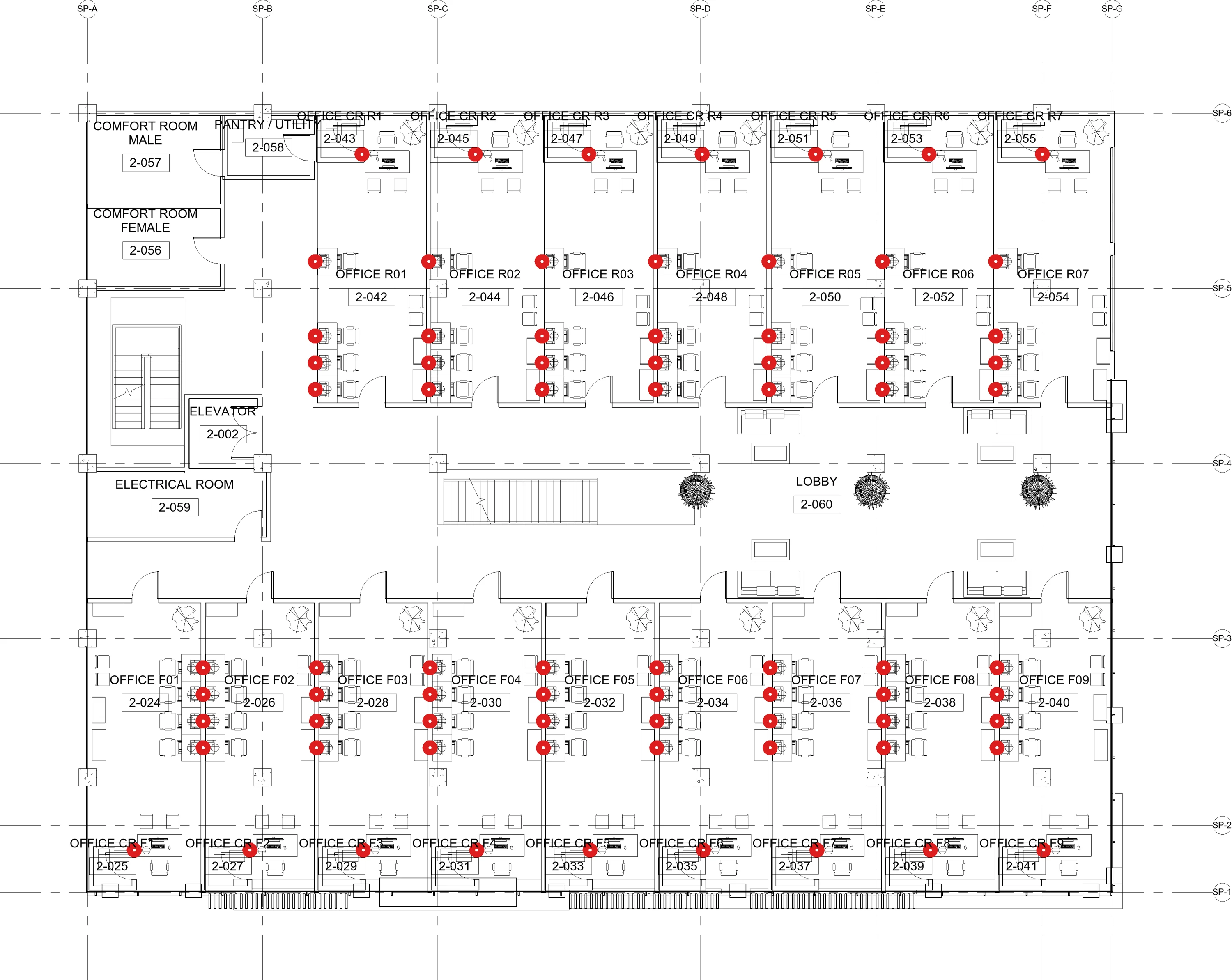
These plans come from the supplied Revit reference reconstruction and show proposed furniture Layout A. The 16 office spaces are planning capacity, not a statement of the number of current members. Room codes do not establish a member’s assignment. Inferred dimensions, partition positions and structural columns require confirmation against original drawings and site conditions. The Session Hall preview has been corrected to Edgar’s latest description: glass enclosure, side TV wall, translucent polycarbonate atrium roof and no columns in the middle. The supplied reconstructed model and the interior model are now corrected for those hall features, including three rows of public chairs on each side. The downloadable original setup guide predates this correction; its hall roof and column assumptions are superseded. The revised online plan is used here to locate rooms.
Use the setup guide to compare Layout A and Layout B. No construction or engineering approval is implied.
The side TV becomes a common reference during sessions. Members can follow the agenda and view the same documents together, with individual screens at their desks supporting the discussion.
Illustrative paperless-session concept. TV content is a design preview; this presentation does not add agenda, voting or document-management software.
Meet every office · SP Building room guide ↗Walnut brings warmth. Cobalt carries the building’s identity. Soft neutral finishes and clear circulation create a composed setting for everyday public service.
F. S. Pajares Avenue, near P. Sabate Street,
Pagadian City, Zamboanga del Sur.
The highlighted vicinity follows your supplied map screenshot. The nearby café marker is a landmark; it is not the SP Building entrance.
Open street vicinity in Google Maps ↗Schematic location guide · not to scale · entrance pin to be confirmed.
Explore. Familiarise. Prepare together.
A new home for the Sanggunian, and the people it serves.